The Three Knows: A Critical Lesson from the Avionics & Testing Innovations Conference 2026
By: Marijan Jozic, Managing Director/Owner of Jozic Engineering
It took me some time to get to Heathrow last week. Imagine waking up at 5 a.m. to catch the first flight from Amsterdam to London. Then, after finally settling into seat 6D on an A321neo, the pilot announces a one-hour delay. An hour later, he adds another 90 minutes. At least we were compensated with a biscuit and a glass of water.
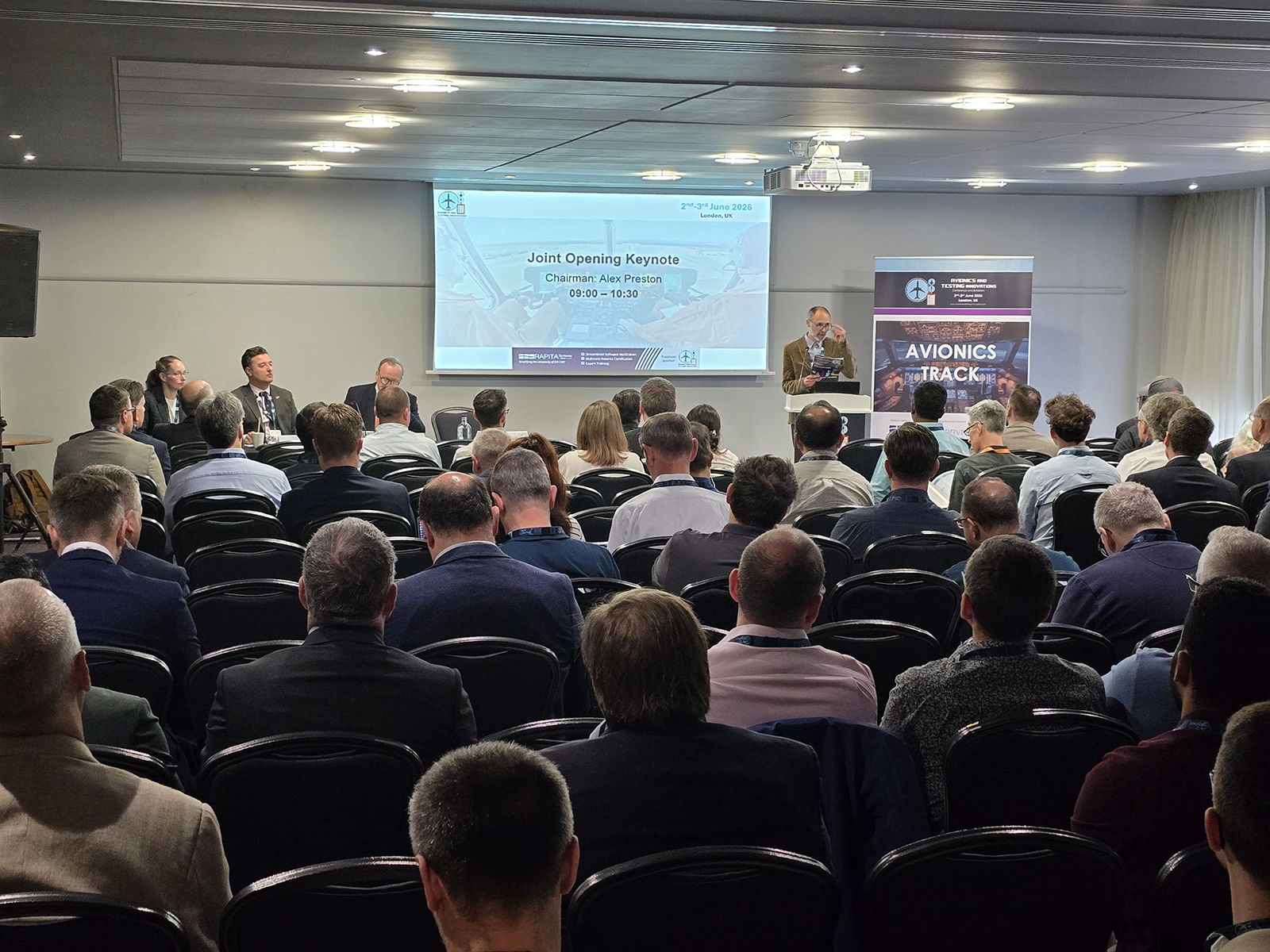
I was travelling to the Avionics & Testing Innovations Conference and Expo, held at the Radisson RED Hotel near Heathrow Airport. The start of my journey was certainly not a success. Fortunately, the conference itself more than made up for the difficult beginning, and by the end of the first day the frustrations of travel had been completely forgotten. This was the second time the event had been held in London. The inaugural conference in 2025 was, from my perspective, a great success. I had never attended a conference dedicated so specifically to avionics testing, and the first edition exceeded my expectations. For that reason, I decided to return in 2026, and I certainly did not regret the decision.
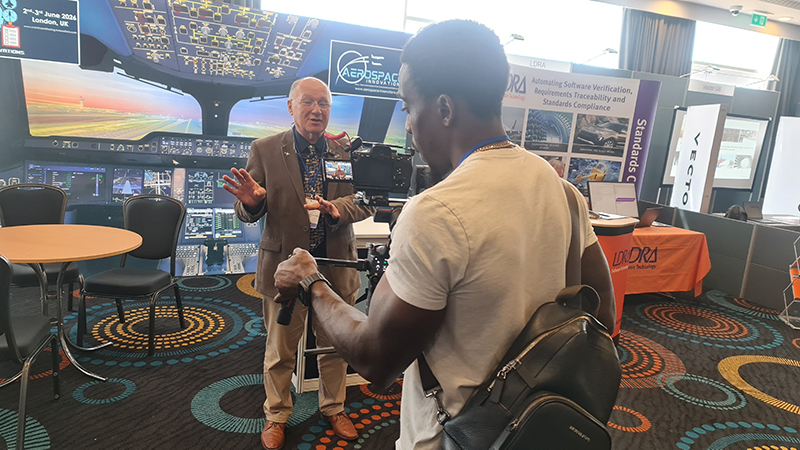
In addition to numerous presentations on testing technologies and methodologies, the exhibition featured companies involved in avionics testing, software development, embedded systems, and standardization. However, what impressed me most was not the technology on display but the people I met. I spoke with engineers from Germany, the United Kingdom, the Netherlands, France, and the United States. Despite their different nationalities and backgrounds, they all spoke a common engineering language. There is something uniquely satisfying about meeting professionals who share the same technical mindset and passion for solving complex problems.
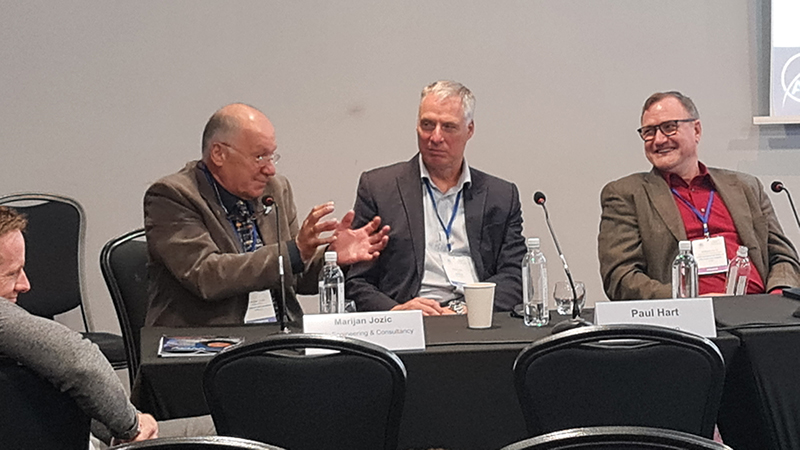
Among all the topics discussed during the conference, one stood out to me more than any other. An entire block of presentations was dedicated to it. The subject was obsolescence—but not the traditional kind associated with ageing hardware, software, or electronic components. Instead, it was the obsolescence of people. More specifically, the potential obsolescence of aviation engineering knowledge.
One speaker presented a definition of obsolescence that I found particularly interesting. Obsolescence is the period between availability and unavailability.
Availability – Unavailability:
The difference appears to be only a small dash, yet that dash can determine the success or failure of an organization.
In recent years, that dash has often been created by the COVID-19 pandemic. Many aviation companies and manufacturers continue to struggle to recruit and retain experienced engineers. During the early stages of the pandemic, especially in 2020, organizations faced severe financial pressure and responded by reducing their workforce. In many cases, some of the most experienced engineers—those only a few years away from retirement—were among the first to leave.
At the time, this seemed like a practical short-term solution. Costs were reduced and organizations survived a difficult period. However, several years later, the consequences are becoming increasingly apparent.
As the industry recovered, companies reopened positions and began hiring new engineers. Yet many discovered that the people who possessed decades of practical experience were no longer available to train the next generation. Some organizations attempted to fill the gap by recruiting highly educated graduates and PhDs, assuming that intelligence alone would compensate for the loss of experience. While these individuals were undoubtedly capable, they often lacked the practical knowledge accumulated through years of working on real aircraft and real systems.
During the conference’s Avionics Track on Obsolescence, I learned about a concept that perfectly describes this challenge. According to several speakers, every organization depends on three types of knowledge: Know-How, Know-Why, and Know-Where.
The first is Know-How:
Know-How can be learned, at least to a certain extent. Engineers can study Component Maintenance Manuals (CMMs), Aircraft Maintenance Manuals (AMMs), Structural Repair Manuals (SRMs), technical drawings, specifications, and standards. They can attend courses, participate in training programs, and learn from textbooks and documentation.
This type of knowledge enables engineers to maintain aircraft, implement modifications, and keep systems operating safely throughout decades of service. Know-How is transferable. It can be documented, taught, and learned. Compared with the other two forms of knowledge, it is the easiest to preserve.
The second type is Know-Why:
Know-Why is often much more difficult to capture because it frequently exists only in the minds of experienced engineers. It explains why a particular design decision was made, why a requirement exists, or why a process evolved in a specific direction. Let me provide an example.
Many ARINC documents refer to the well-known requirement for equipment to tolerate a 200-millisecond power interruption. But why 200 milliseconds? Why not 100 milliseconds or 300 milliseconds?
From a design perspective, engineers can create power supplies capable of surviving any of those durations. The question is not whether it can be done; the question is why 200 milliseconds became the accepted requirement.
Understanding the answer could provide valuable insight into the operational realities, historical considerations, and engineering trade-offs that shaped the standard. If an engineer is developing a new aircraft, designing a new Line Replaceable Unit (LRU), or modernizing an existing platform, understanding the reasoning behind a requirement can be just as important as understanding the requirement itself.
Consider aircraft families such as the Boeing 737 or Airbus A320. These platforms have remained in service for decades and continue to evolve through numerous upgrades and redesigns. Future engineers will inevitably encounter design choices that prompt the question: “Why was it done this way?”
Sometimes the answer is obvious. Sometimes it is hidden in the memories of a handful of individuals who participated in the original design process. If that knowledge is never documented or shared, it may disappear forever.
The third type of knowledge is Know-Where:
Know-Where answers a deceptively simple question: Where can the information be found?
This form of knowledge may be the most important of all. There is an old saying that those who forget the past are doomed to repeat it. The same principle applies to engineering. If engineers cannot find previous analyses, test reports, design studies, or lessons learned, they may be forced to repeat work that was already completed years or even decades earlier.
Modern digital systems have significantly improved our ability to store and search information. Documents can be indexed, tagged, and retrieved using powerful search tools. However, even today there are often only a limited number of individuals who truly know where critical information is stored and how to find it. When those individuals retire, change companies, win the lottery, or simply move on, organizations may discover that valuable knowledge has effectively disappeared. The documents may still exist somewhere, but nobody knows where to find them. Without Know-Where, it becomes impossible to access Know-Why, and without Know-Why, organizations risk making the same mistakes again.
Unfortunately, the workforce reductions that occurred during the COVID-19 pandemic accelerated this problem in many industries, including aerospace. In some cases, organizations unintentionally lost decades of institutional knowledge in a very short period of time. One of my engineering colleagues from Boeing described the situation perfectly:
“The engineers who are gone know where the bodies are buried.”
Another engineer used a different expression:
“They know where the hidden snakes are.”
Both statements convey the same idea. Experience matters, and some forms of knowledge cannot be replaced quickly.
For me, the concept of the Three Knows was one of the most valuable lessons from the conference. It was only one of many insightful discussions that took place throughout the event, but it is the one that stayed with me long after I returned home.
This is precisely why I continue to attend aviation conferences and industry events. They provide opportunities not only to learn about emerging technologies but also to understand the broader challenges facing our industry. They allow engineers to exchange ideas, share experiences, and transfer knowledge before it is lost. I would strongly encourage younger engineers who are passionate about aviation to make conference attendance a regular part of their professional development. Knowledge is available, but only if you actively seek it.
The aviation industry’s future depends not only on developing new technologies but also on preserving the expertise that made those technologies possible in the first place. Because of the success of both the first and second editions of the Avionics & Testing Innovations Conference, I have already decided to return to London for the third edition next year. Hopefully, this time the A321neo flight from Amsterdam will depart on schedule.