Mobility matters
A mobile-first design approach to MRO can unlock benefits both quantifiable and intangible.
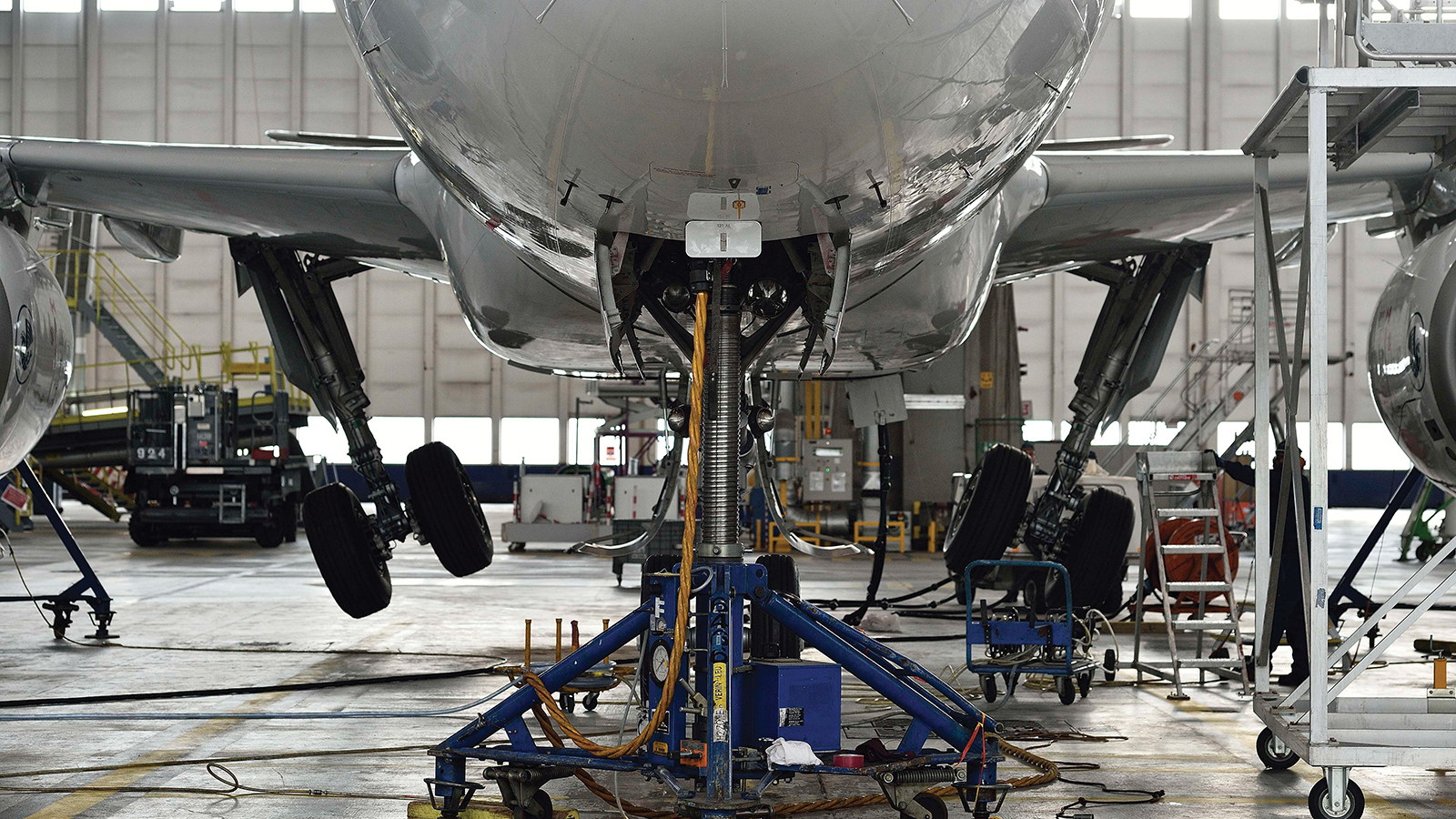
The aircraft hangar can be a juxtaposition of technologies – where the last generation of aircraft are serviced by maintenance engineers and technicians using physical manuals, endless paper task cards.
A significant proportion of line maintenance operations still rely on paper-based processes or partial digitisation, with engineers completing work on paper and re-entering it into systems later,” says Scott Wells, Managing Director at MRO Professional Consulting.
These conventional methods often introduced inefficiencies such as paper-intensive workflows, information silos on the floor, reactive troubleshooting, and training and knowledge transfer limitations.
But in an industry notoriously slow in adopting new technology, things are changing.
“We are seeing a clear shift toward tablet-based workflows, particularly in organisations looking to improve efficiency, compliance, and commercial control. Across our own customer base, mobile device usage is becoming standard rather than exceptional, particularly for line maintenance activities.
“The direction of travel is very clear — smart devices are becoming the primary interface for engineers,” he asserts.
A mobile-first design approach to MRO means designing the maintenance workflow around the engineer at the point of task. The objective is that an engineer can stand at the aircraft, in the hangar, or at the component, with a tablet in hand, and complete the work, capture the evidence, and progress the record there and then.
As Wells explains, in MRO, mobile-first is not simply a desktop system reduced to fit a smaller screen. “Engineers, planners, compliance teams and finance users all work in very different ways. In practice, the most effective approach is a dedicated engineer-facing mobile application connected to a wider desktop/web platform for planning, compliance, stores, commercial and management workflows. Both sit on the same live data model, but they are designed for different environments.
“The key components are intuitive task-led workflows, point-of-use access to data, structured capture of work completed, integrated photo/document capture, digital signatures where approved, and real-time synchronisation into the wider MRO operation. The real value is that data is captured live at source, where it is most accurate, rather than reconstructed later from memory or paper notes,” he remarks.
Helping hands
Mobile-led MRO is best suited to any activity that takes place at the point of maintenance. This includes:
– line maintenance work order completion.
– defect (NRC) capture and reporting.
– digital task cards and check completion.
– parts, tools and consumables tracking.
– photo and document capture.
– AOG reporting and communication.
– mobile stores transactions (receipt, issue, dispatch).
– time booking and job clocking.
– digital signatures and record sign-off.
The aviation industry has long been defined by precision, discipline—and paper. For decades, clipboards, handwritten logbooks, and stacks of maintenance records were as essential to flight operations as the aircraft themselves. That reality is rapidly changing. As airlines and maintenance, repair, and overhaul (MRO) providers face increasing pressure to improve efficiency, ensure compliance, and operate in real time, the shift to paperless technology has become not just inevitable, but essential. At the forefront of this transformation is ULTRAMAIN.
What distinguishes ULTRAMAIN is not simply its ability to digitize paper, but it’s understanding that true transformation requires rethinking how work gets done. Across airline operations and third-party MRO environments—whether airframe heavy checks, engine overhauls, or complex component repair—paper-based processes have historically created delays, inefficiencies, and gaps in visibility. ULTRAMAIN addresses these challenges by embedding digital workflows directly into the operational fabric.
At the center of this approach are solutions like ULTRAMAIN’s Electronic Logbook (ELB) and Mobile Mechanic. The ELB replaces traditional paper logbooks in the cockpit, enabling pilots to capture defects, delays, and operational data digitally and in real time. That information flows instantly to maintenance teams, eliminating manual handoffs and ensuring that issues identified in flight are immediately actionable upon arrival.
For maintenance organizations—both airline line maintenance and base maintenance, and third-party MRO providers—Mobile Mechanic extends paperless capability to the hangar floor and shop environment. Technicians can access work packages, task cards, and engineering instructions directly on mobile devices, record work performed, and complete sign-offs at the point of execution. In heavy maintenance and overhaul settings, where documentation volumes are significant and processes are highly controlled, this eliminates redundant data entry, reduces turnaround times, and improves overall workflow efficiency.
The impact is tangible across the entire maintenance ecosystem. Airframe overhaul teams gain real-time visibility into task progression. Engine and component shops benefit from more accurate tracking of disassembly, inspection, and reassembly steps. Airlines experience faster aircraft returns to service, supported by tighter coordination between flight operations and maintenance. In every case, the shift from paper to digital creates a continuous, connected flow of information.
Equally critical is the role of digital systems in compliance and traceability. Aviation remains one of the most highly regulated industries, particularly within MRO environments where detailed records are essential. ULTRAMAIN’s MRO solutions provide structured, time-stamped, and fully traceable data that supports regulatory requirements while simplifying audits. For overhaul providers managing complex assemblies and life-limited components, this level of control and visibility is essential.
Adoption, however, depends on more than functionality. ULTRAMAIN places strong emphasis on usability, ensuring that its applications are intuitive for pilots, technicians, and inspectors working in demanding, time-sensitive environments. This focus accelerates implementation and drives consistent usage across both airline and MRO operations.
Looking ahead, paperless technology is only the starting point. By capturing high-quality, real-time data across line maintenance, heavy maintenance, and overhaul activities, ULTRAMAIN enables organizations to move toward more predictive, data-driven operations—improving planning, optimizing capacity, and enhancing long-term asset performance.
In an industry where efficiency, safety, and reliability are paramount, ULTRAMAIN is not just supporting the transition to paperless—it is helping define the future of connected aviation operations across airlines and the global MRO community.
Wells adds that alongside this, it is important that mobile solutions are complemented by access to technical data platforms such as OEM documentation systems (e.g. Airbus and Boeing portals), so engineers have both execution capability and reference material available in the same environment.
Implementing a mobile-first approach to MRO empowers maintenance engineers and technicians with intelligent tools and connected information, creating an environment where maintenance is more proactive, precise, and integrated,
The primary benefit of such an approach can be distilled down as data accuracy at source. “When engineers complete records after the fact, there is always a degree of loss — missing items, incomplete detail, or incorrect transcription,” says Wells.
“From a quantifiable perspective, we consistently see revenue leakage in traditional processes due to delayed or incomplete data capture. In our own implementation experience, this is often in the region of 5–15% of potential revenue, with some organisations significantly higher prior to digitisation. This is typically linked to missed chargeable items, incomplete records, and delays in invoicing,” he states.
Mobile-first workflows remove that latency. Data is captured once, at the point of maintenance, and flows directly into reporting and invoicing. This improves revenue capture and cash flow, speed of invoicing, auditability and compliance and customer confidence in reporting quality.
Beyond the financials, there are strong qualitative benefits — improved engineer experience, reduced administrative burden, better traceability, and a more transparent operation overall.
Better by design
According to product designer, Amira Elbana, modern MRO apps should be designed with mobile devices in mind, offering responsive interfaces that adapt seamlessly to different screen sizes. Technicians need to access information and complete tasks on the go, whether they’re in the hangar or on the flight line.
She says navigation needs to be intuitive. “Say goodbye to endless menus and cryptic commands. A well-designed app features clear, logical navigation, allowing technicians to quickly find the information they need, when they need it. Think clear visual cues, intuitive icons, and a streamlined information architecture.”
MRO-PRO is a cloud-based, mobile-first MRO platform designed specifically around the engineer workflow.
At the core is a dedicated iOS and Android application used by engineers to capture and complete maintenance activity live at the aircraft or component. This includes line maintenance work orders completed in real time at the aircraft, digital record capture using device cameras, tracking of man-hours, parts, tools, services and equipment, defect and aircraft on ground (AOG) reporting, digital “sign-on-glass” capability, and automatic generation and distribution of maintenance reports to customers.
Wells explains that this mobile layer is fully integrated with a broader web-based platform that manages tasks including planning and resource forecasting, compliance, competency and recency monitoring, procurement, stock and logistics, workshop and base maintenance operations, invoicing and financial reporting.
“The system is designed so that engineers capture data once, at source, and that data then flows through the entire organisation — from compliance to finance — without re-entry,” he says.
With solutions like Ultramain Mobile Mechanic, traditionally paper-based maintenance execution can be performed and captured 100% digitally at the point of work.
At a high level, Ultramain Mobile Mechanic is designed to digitise maintenance execution without forcing organisations to redesign their entire operation, says John Stone, Vice President of Product Management at Ultramain Systems, “For many MROs, the starting point is still paper or PDF-based work packages, and one of the key strengths of the solution is the ability to import and execute those packages fully digitally with regulatory confidence. Ultramain provides tools to rapidly ingest, structure, and package this content, eliminating days of manual preparation and enabling maintenance teams to move from paper to paperless without radically changing existing planning or engineering processes.
“On the hangar floor, Mobile Mechanic acts as a single, centralised workspace for technicians and inspectors. It goes well beyond task card execution to support the full scope of maintenance activity—digital stamps and signatures, parts requests and changes, non-routine creation, shift handovers, time capture, and even training-related workflows. By consolidating these activities into one mobile experience, the solution reduces fragmentation, improves real-time visibility, and ensures that all maintenance actions are captured digitally. The result is a fully paperless execution ecosystem that supports compliance, improves efficiency, and produces high-quality data without adding complexity for frontline teams,” says Stone.
For Elbana navigation needs to be intuitive. “Say goodbye to endless menus and cryptic commands. A well-designed app features clear, logical navigation, allowing technicians to quickly find the information they need, when they need it. Think clear visual cues, intuitive icons, and a streamlined information architecture.”
OASES Lumina is OASES’ brand-new maintenance and engineering platform. With fully web-native access, users can securely access the full platform from any browser, on any device. Whether it’s a desktop in the office or a tablet on the hangar floor, teams have the same responsive interface.
According to the company, every screen, list, and icon has been reimagined, prioritising speed, clarity, and ease of use. The app has also been rebuilt to offers native device capabilities, including offline access. With offline access, the new app ensures technicians can keep working without interruption. Once reconnected, updates synchronise automatically.
Maintaining compliance
In a recent whitepaper, Impresa noted that many aviation MRO providers continue to rely on outdated compliance processes. “Manual recordkeeping with paper logs or spreadsheets is error-prone and time-intensive, creating risks of missing data, transcription errors, and delays in updating critical records,” they wrote.
As they remarked, the move from manual compliance to digital MRO solutions is no longer optional—it’s essential. Modern aircraft MRO software platforms enable providers to maintain accurate, real-time records across every component, tool, and process, eliminating inefficiencies and embedding compliance directly into MRO workflows.
From an operational perspective, the MRO-PRO platform includes a full compliance framework covering user competency, recency, authorisations, procedures, audit management and safety reporting. This ensures that mobile workflows remain fully aligned with regulatory requirements.
From a data protection and hosting perspective, our approach aligns with recognised security standards, including ISO-aligned policies and Cyber Essentials Plus certification. Data is securely hosted in controlled cloud environments, with appropriate access control, encryption and monitoring in place.
Stone says that cyber security and data protection are foundational to how ULTRAMAIN designs and delivers its solutions, particularly in highly regulated aviation environments.
“Ultramain Systems is certified to ISO 27001 and AS9100, which means our information security and quality management systems are independently audited and aligned with internationally recognised standards. ISO 27001, in particular, focuses on establishing a systematic framework for managing information security risk-covering policies, controls, monitoring, and continuous improvement-so data is protected throughout its lifecycle.
“Beyond certification, security is reinforced through ongoing internal and external penetration testing, as well as AI-assisted code reviews that help ensure secure development practices are consistently applied. Within the software itself, Ultramain supports role-based access controls, digital authentication, and built-in multi-factor authentication, with the ability to integrate seamlessly with corporate or cloud-based identity management systems. From a data protection standpoint, all data is encrypted both in transit and at rest. Together, these measures ensure that maintenance data remains secure, traceable, and compliant—while still being accessible to the right people at the point of work.”
Device management is a critical component of any mobile-first strategy.
Best practice typically includes centralised device management (MDM), particularly for larger organisations, standardised device configurations across the business, remote wipe and reset capability, restricted application environments to control usage, secure authentication and access controls, and clear policies on personal vs company-issued devices.
The most effective organisations remove complexity from the end user by centrally managing devices, ensuring consistency, security and ease of support.
Overcoming reticence
Given the benefits of mobile-led MRO and the transformative advantages of its implementation, why has adoption been so historically low?
“In our experience, the primary barrier is not technology — it is organisational change,” says Wells.
Findings from a 2024 McKinsey & Company survey backs this up. Its Aircraft MRO 2.0: The digital revolution found that more than 80% of respondents consider data limitations to be the most significant barrier to digital adoption at their organisations. “This sentiment could result from the MRO industry’s reliance on physical recordkeeping (in large part due to regulatory mandates requiring paper records), which can create fragmented data collections that are difficult to transfer into digital databases,” the survey authors posited.
The survey also purported that airline MROs are 25% more likely than their industry peers to believe that digital will be critical in the implementation of future strategy. “Because their airline parent companies are consumer-facing and tend to be comparatively tech-forward, airline MROs might be more likely than their peers to have witnessed the benefits of digital transformation firsthand,” the authors suggest.
“The tools now exist, and they are proven,” asserts Wells. “The challenge is typically the time and focus required within leadership teams to implement change across operations. There is often a perception that transition will be disruptive or resource intensive.
“In reality, implementations are usually more straightforward than expected. Engineers tend to adopt well-designed mobile systems quickly, particularly when they reduce administrative burden. The larger challenge is organisational prioritisation — making the decision to move and committing to it,” he says.
One airline to have embraced mobile-led MRO is British Airways.
The airline says that mobility is important to help its engineering team run operation more effectively. iPhones and iPads are now in use in the working environment allowing aircraft manuals, read and sign, engineering procedures, material availability, action tasks, declare serviceable, and fit/remove components applications to be viewed on the devices.
The UK flag carrier has rolled out MRO-PRO’s Line Maintenance functionality to its engineers, enabling the capture of live data via mobile tablets while working on aircraft – ensuring greater accuracy, efficiency, and real-time visibility. The project covers over 30 international stations – including major hubs such as Miami (MIA), New York (JFK), Boston (BOS), Chicago (ORD), Barcelona (BCN), Madrid (MAD), Sydney (SYD), Delhi (DEL), Manchester (MAN), and London Gatwick (LGW).
Ramco Systems has embarked on providing a next-gen mobile strategy for its customer base back in 2016, collaborating with its customers to launch Anywhere Apps on mobile for Mechanics, Supervisors, Customers, Pilots & Storekeepers.
The Mechanic Anywhere application simplifies the daily operations of a line Mechanic/Engineer. The application directs the mechanics/supervisors to know pending/next actions through an intuitive dashboard and enables the line mechanic to perform scheduled maintenance activities and also record defects over an ‘E-Log’ on the fly. While carrying line maintenance actions, the app facilitates the line mechanic to request parts, perform component replacements, labour recording, parts consumption, discrepancy reporting, review attachments and perform sign off at ease through smart and touch actions.
Air Asia Company Limited (AACL), Taiwan’s first privately-owned aircraft maintenance company catering to aircraft maintenance of commercial aircraft, has been using the Mechanic Anywhere mobile app since 2022, and Korean Air has recently activated the app on behalf of over 400 mechanics and engineers, who are using it for performance maintenance execution digitally, at the airline’s Engine Maintenance Center in Seoul.
Act now
For others considering adopting mobile-first workflows and MRO, Wells has some simple advice, “Start.”
“Many organisations spend too long evaluating options or waiting for the “right time”. In practice, the benefits — both operational and financial — are realised quickly once systems are in place.
“Cost is often perceived as a barrier, but in reality, improved efficiency, better revenue capture and faster invoicing typically outweigh implementation costs. The longer organisations delay, the longer they continue to operate with avoidable inefficiencies.
“Our experience is that once implemented, organisations do not go back,” he says.
Once there, what is next?
Wells believes the next phase of mobile-first MRO will be driven by AI and data intelligence.
“There are two key developments,” he says. “First, the pace of software development is accelerating, allowing new features and improvements to be delivered much faster.
Second, AI is becoming embedded within the operational data itself. This will enable intelligent task and defect prediction, automated planning and forecasting of man-hours, parts and tools, more intuitive search and interaction with maintenance data, and AI-assisted workflows that guide engineers and planners in real time.
“We are already seeing the emergence of AI assistants within MRO platforms,” says Wells. “When properly integrated, these act less like generic chatbots and more like an experienced system expert sitting alongside the user, helping them navigate processes and extract value from the system.
“Over the next few years, this combination of mobile-first execution and AI-driven intelligence will significantly change how MRO organisations plan, execute and analyse maintenance activity.”
By Alex Preston