Military Aircraft Upgrades: Excellent Opportunities for Middle Market Suppliers
Bruce Andrews, Partner & Troy Medeiros, Vice President Alderman and Company Aerospace & Defense M&A Bankers
Introduction
The US & Allied militaries have been focused on investing heavily in 5th Generation Upgrades to legacy military aircraft. The objective is to significantly extend the operational life of specific military aircraft programs by investing in technological upgrades in select aircraft that will bring them to 21st century performance without having to start with a completely new design. Such an approach is less costly and time consuming than having to design, develop, test, and qualify new aircraft. While 5th generation upgrades are not universally agreed upon, they frequently involve improving stealth capability, higher aircraft maneuverability, advanced avionics, improved situational awareness for the pilot, and improved armament. Current examples of aircraft undergoing 5th generation upgrades include the Eurofighter Typhoon, the F-35, and the legacy B-52 Stratofortress, chosen largely for their mission capability and strategic utility. These platforms will serve as the focal points for this article to penetrate the variety of upgrade programs and demonstrate the kinds of opportunities that are available to the A&D middle market and hence the many avenues potentially available to those companies.
Opportunities for Middle Market Suppliers
For middle-market suppliers, programs such as the Eurofighter, F-35 and B-52 fifth generation upgrades are especially important because they create long-term, recurring opportunities across a wide range of specialties. Companies providing precision machining, electronics, avionics upgrades and integration, specialty materials, or maintenance and repair services all find steady demand as these aircraft are upgraded and sustained over decades. Unlike new development programs, which often favor only the largest primes, modernization efforts open the door for smaller suppliers to play critical roles in the supply chain. This stability not only helps middle-market firms grow and diversify their revenue streams but also enhances their attractiveness to private equity and strategic buyers who value predictable, program-driven cash flows.
Funding Context:
In the United States, the retrofits of 5th generation platforms, such as the B-52 and F-35, are underwritten by fiscal appropriations for FY2025, totaling more than $45 billion, routed through both procurement and Research Development Test and Evaluation (RDT&E) budget lines, set and approved under the National Defense Authorization Act (NDAA), annual appropriations processes, and reinforced by defense acquisition plans. These commitments for upgrades of engines, avionics, and sustainment are not abstract—they are visible in line-item funding requests that signal durable federal support.
Specifically, the Air Force’s FY 2025 budget allocates nearly $20 billion to modify and sustain legacy aircraft fleets, ensuring that platforms like the B-52, and F-35 remain mission-ready for decades. Targeted programs, such as the B-52 Radar Modernization Program, consistently receive tens of millions in annual funding, demonstrating how modernization is phased and recurring rather than episodic.
Separately, the F-35 program continues to draw billions in procurement and sustainment dollars, supported not only by U.S. appropriations but also by international partner contributions. Together, these appropriations illustrate how retrofit, and modernization programs are designed to lock in multi-decade spending horizons—funding streams that provide consistent opportunity across the supplier base.
In Europe, the Eurofighter Typhoon program provides a similarly durable funding horizon, backed by parliamentary approvals and long-term national defense budgets across Spain, Germany, the U.K., and Italy. Spain’s Halcón I and II programs alone allocate more than €4 billion with deliveries scheduled between 2030 and 2035, while Germany has authorized hundreds of millions of euros for Phase 4 Enhancement upgrades, new radar systems, and Tranche 5 aircraft, ensuring output for suppliers through the next decade. The U.K. has committed £2.35 billion for Typhoon sustainment through 2040 and over £200 million for the acquisition of the ECRS Mk2 AESA radar through 2028. These investments are structured through multi-year defense appropriations, special acquisition funds, and consortium-wide contributions, locking in modernization activity to at least 2035 and creating long lead demand cycles that directly benefit middle-market suppliers providing avionics, sensors, materials, and integration services across the Pan-European defense industrial base. Importantly, this sustained funding is also being driven by the pursuit of keeping pace with rising global demand for advanced defense capabilities, as European nations seek to ensure competitiveness and interoperability on the world stage.
The B-52 Stratofortress
While focused on the U.S., The B-52 stands as one of the most enduring aircraft in U.S. Air Force history, first entering service in 1955 at the height of the Cold War. Originally designed to carry nuclear weapons on long-range deterrence missions against the Soviet Union, the B-52 quickly became a central pillar of American strategic power. Over the decades, it has proven its versatility across a wide range of missions, from Vietnam-era carpet bombing to precision strikes in Iraq and Afghanistan, cementing its reputation in U.S. air operations. The B-52 continues to fly well into the 21st century, with the Air Force planning to keep the fleet of 78 aircraft operational well into the 2050s.
This remarkable longevity has created significant opportunities for modernization. Current retrofit programs include new Rolls-Royce F130 engines, digital avionics suites, radar upgrades, and structural reinforcements designed to extend the bomber’s life and improve efficiency. These initiatives represent multi-billion-dollar programs that not only sustain prime contractors such as Boeing and Rolls-Royce but also drive demand throughout the supply chain, particularly the middle-market aerospace and defense suppliers by providing products and services for the sustainment of 5th generation platforms. The B-52 serves as a prime example of how modernization programs create enduring opportunities across the U.S. defense industrial base.
Eurofighter Typhoon Modernization
In Europe, the Eurofighter Typhoon is undergoing significant modernization to remain competitive into the 2040s. Current programs include the integration of the Captor-E AESA radar, advanced electronic warfare defensive aids, and new targeting pods such as the Litening 5. Each of these systems requires new subsystems, antennas, cooling infrastructure, and digital integration—prime opportunities for niche suppliers.
At the same time, production rates are being scaled up, with output expected to nearly double by 2028 as new orders are fulfilled from Germany, Spain, Italy, and export customers such as Turkey. These expansions ripple through the supply chain, generating additional demand for avionics, precision components, and sustainment services.
F-35 Block 4 and “5th Generation Plus”
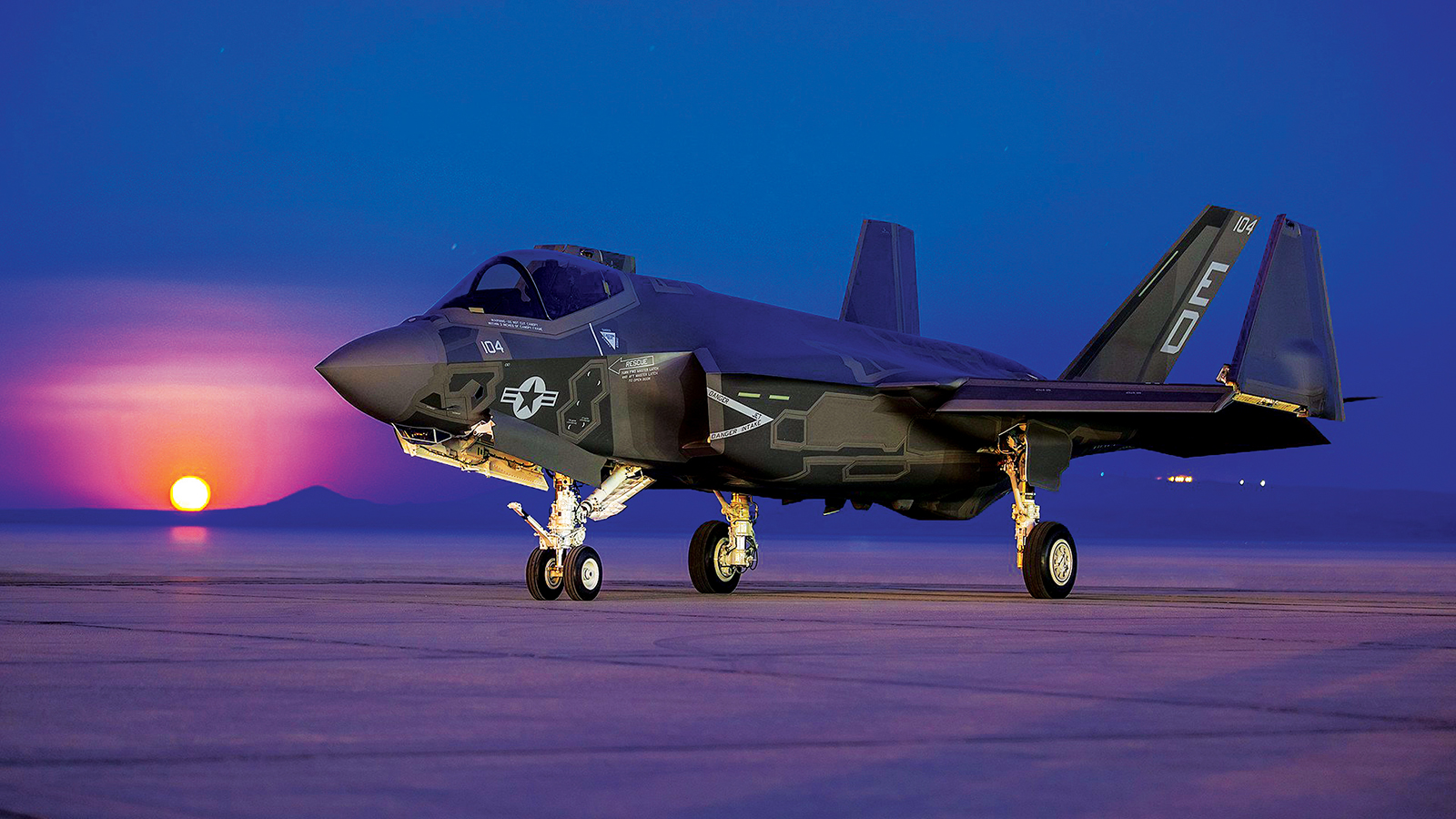
The F-35 Block 4 program represents one of the most significant upgrade cycles of fighter aircraft for the United States. Key improvements include expanded weapons carriage, next-generation sensors, and advanced mission systems powered by Technology Refresh 3 (TR-3), which delivers twenty-five times the computing power of the previous generation.
These advancements create opportunities for suppliers specializing in processors, displays, wiring harnesses, cooling systems, and mission software integration. Because many of these upgrades are modular, middle-market firms can capture contracts that may otherwise be dominated by large primes.
Lockheed Martin has also introduced a “5th Generation Plus” roadmap, which integrates select technologies from the Next Generation Air Dominance (NGAD) program—such as advanced infrared sensors and autonomous drone-control features. For suppliers, this evolution emphasizes demand for secure software, digital engineering, and modular or interchangeable components (also known as open systems).
Conclusion
For middle-market aerospace and defense suppliers, compelling opportunities are obtainable as the sustainment and modernization of 5th generation platforms continue to proceed. These programs are structured around multi-decade horizons, providing not only revenue stability but also clear pathways for companies that can establish themselves early in the lifecycle. The B-52, and other platforms illustrate a cycle. If suppliers enter at the right stage and demonstrate required capabilities, then they can potentially secure enduring work that extends far beyond initial contracts.
Success begins with building relationships early. By cultivating relationships during the design and qualification phases, middle-market suppliers can position themselves as go-to partners when program funding ramps. However, getting qualified is the next crucial step. Aerospace & Defense procurement is structured to reward persistence. Suppliers that invest in technical certifications, security clearances, and quality systems required by primes are often rewarded with long-term access to contract opportunities. Qualification is not just a barrier to entry; it’s a moat that can create durable competitive advantage for smaller companies.
The development stage frequently requires low-quantity prototype or engineering hardware. This favors nimble suppliers with the flexibility to manufacture small batches of highly complex parts. While margins may be thinner at this stage, it is the proving ground that establishes credibility and trust.
Once a design stabilizes, production opportunities expand dramatically. Suppliers that have already demonstrated capability are well positioned to win larger-scale manufacturing contracts, including replacement parts. These contracts often extend over decades.
Finally, sustainment programs create significant future opportunities for key suppliers on these upgraded components. Suppliers that manufactured these parts are natural candidates to provide ongoing support, creating a recurring revenue stream that extends the lifecycle value of each program.
Taken together, these stages form a durable growth pathway for middle-market aerospace & defense companies. From early engagement through long-term sustainment, 5th Generation platforms lock in demand cycles that reward capability, agility, and persistence, making them one of the most attractive sectors for suppliers seeking to grow, diversify, and capture multi-decade value.