
ARTEMISA Paves the Way for Smarter Air Traffic Management in Europe
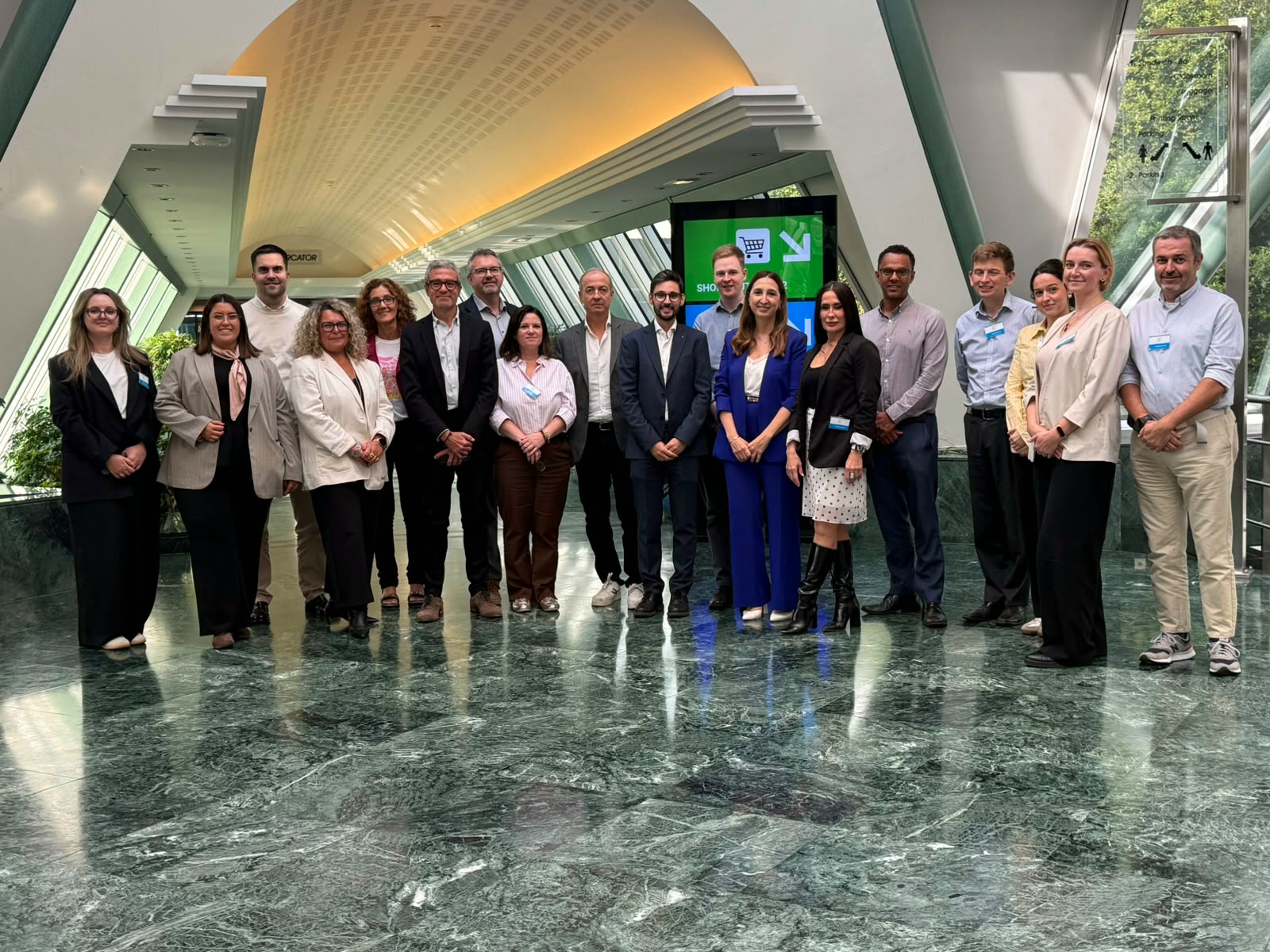
The SESAR project ARTEMISA (WA3.1 – Next-Generation ATS Platforms for En-Route and Terminal Area Operations) has officially commenced with its kick-off meeting held this week at the headquarters of the SESAR Joint Undertaking in Brussels, bringing together representatives from industrial partner and project coordinator, Indra, together with the eight air navigation service provider participating in the iTEC Collaboration.
The launch of ARTEMISA marks the beginning of one of the most ambitious European research and innovation initiatives in air traffic management, aimed at accelerating the implementation of the Digital European Sky through the development of a new generation of air traffic service (ATS) platforms.
With a total project budget of €39,28 million and SESAR funding rate of 70%, ARTEMISA represents a strategic milestone for the iTEC Collaboration and a major boost for the continued evolution of iTEC SkyNex. The approval of this ambitious project, in which all iTEC members participate jointly, reinforces the collaborative dimension of the alliance while supporting the objectives set out in the European ATM Master Plan.
The meeting in Brussels provided an opportunity for all partners to align priorities, governance arrangements and technical work plans for the coming three years. The project will drive the development of advanced operational capabilities for both en-route and terminal area operations, enabling higher levels of digitalisation, automation and interoperability across Europe’s ATM network.
Through ARTEMISA, the iTEC Collaboration further strengthens its position as one of the leading technological alliances in European air traffic management. The project builds on years of joint development and reinforces the commitment of its members to delivering innovative solutions that will support safer, more efficient and more sustainable aviation.
Marcel Bakker, Director of iTEC, highlighted the significance of the project launch:
“The start of ARTEMISA represents an important step forward in our shared ambition to deliver the next generation of ATM platforms for Europe. Bringing together the expertise, experience and innovation capacity of the entire iTEC Collaboration allows us to address some of the most important challenges facing air traffic management in the coming decades.”
He added:
“The kick-off meeting in Brussels demonstrates the strength of our collaborative model and the commitment of all partners to transforming the vision of the Digital European Sky into operational reality. ARTEMISA will help shape the future ATM ecosystem by combining advanced automation, enhanced interoperability and resilient digital architectures.”
Víctor Martínez, Executive Vice President of ATM at Indra Group, stated:
“ARTEMISA marks a decisive step forward in the evolution of air traffic management in Europe and the technology that will underpin its future in the years ahead. Together with the members of the iTEC Collaboration, we are driving a new generation of solutions based on an open, modular and interoperable service architecture, aligned with the principles of the New Service Delivery Model (NSDM) and the SESAR Master Plan. This approach will enable ATM capabilities to be developed with greater flexibility and adapted to the needs of our customers and the different air navigation service providers. At Indra Group, we are firmly committed to this initiative and to developing a more innovative, digital, automated, resilient and safe air traffic management system. With ARTEMISA, we are taking off towards a new era for European ATM, supporting the objectives set out in Common Project 2 and the next phase in the deployment of the Single European Sky.”
ARTEMISA will take intelligent automation a step further by advancing towards EASA (European Union Aviation Safety Agency) Level 4 automation, enabling systems to make and execute decisions autonomously in routine situations under defined operational conditions. The project will also strengthen cybersecurity in information exchange and facilitate the seamless integration of different platforms and technologies through a modular and flexible architecture.
ARTEMISA brings together all members of the iTEC Collaboration under a common research and innovation programme, reinforcing cooperation among European air navigation service providers and supporting the delivery of a more connected, digital and sustainable aviation system.
ARTEMISA will commence in September 2026 and will run for a period of 36 months. Its Grant Agreement ID is 101288834 and website https://sesar.eu/projects/ARTEMISA.
About iTEC
iTEC is an alliance formed by eight air navigation service providers: DFS (Germany), ENAIRE (Spain), NATS (United Kingdom), LVNL (Netherlands), PANSA (Poland), Avinor (Norway), Oro Navigacija (Lithuania), and NAV CANADA (Canada), with Indra as the technological provider. Together, they have developed and are deploying the next-generation air traffic management system, iTEC SkyNex, which enables more collaborative and efficient flight control.
About SESAR 3 Joint Undertaking
SESAR is the technological pillar of the EU’s Single European Sky policy and a key enabler of the European Commission’s Sustainable and Smart Mobility Strategy. SESAR defines, develops and deploys technologies to transform air traffic management in Europe. The SESAR 3 Joint Undertaking (SESAR 3 JU) is a European institutional public-private partnership set up to accelerate through research and innovation, the delivery of this digital transformation, in other words, the Digital European Sky. To do so, it is harnessing, developing and accelerating the take-up of the most cutting-edge technological solutions to manage conventional aircraft, drones, air taxis and vehicles flying at higher altitudes. With the Digital European Sky comes the promise of making Europe’s airspace the most efficient and environmentally friendly sky to fly in the world. Building on the work of the first SESAR Joint Undertaking, the SESAR 3 JU has 10-year mandate (2021-2031), corresponding to the duration of the Horizon Europe programme (2021-2027), followed by 4 years to complete the work outlined in the Multiannual Work Programme.


