The Rise of Unmanned Aircraft Systems (UAS)
By: Bruce Andrews, Partner and Troy Medeiros, Vice President at Alderman & Company
Introduction
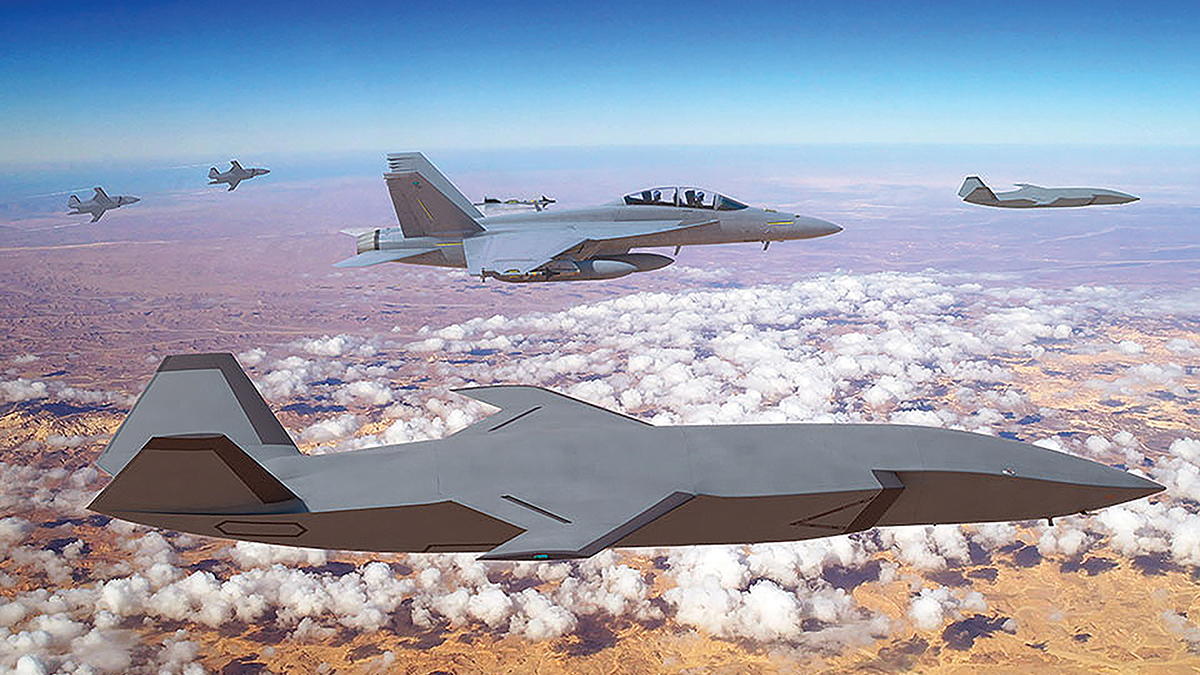
Large, unmanned aircraft systems (UAS) and counter unmanned aircraft systems (C-UAS) are driving a rapid transformation of the global defense landscape. While UAS technology is not new, the first large UAS was flown in 1994, the current surge in interest reflects a shift toward autonomous and more capable systems. From Airbus’s partnership with Kratos Defense & Security on next-generation combat drones to the first flight of the MQ-9B SkyGuardian in Belgium, interest in large drones has exploded across both the United States and the European Union (EU).
This growth reflects a fundamental change in how NATO and its allies are preparing for future conflict. As geopolitical tensions intensify and defense modernization accelerates, demand is growing for uncrewed platforms capable of surveillance, strike, and coordinated air, land, sea, and space operations. Autonomous UAS, in particular, are now enabling new mission capabilities that were not possible with earlier generations of remotely piloted aircraft.
The global drone market now exceeds $74 billion and continues to expand at an estimated 14% annual growth rate. This growth is reshaping the defense industrial base (DIB), particularly among mid-tier and lower-tier suppliers that support major prime contractors. For these companies, the evolution of large UAS programs presents both significant opportunities to expand into new platforms and the increasing pressure to adapt to customers’ evolving requirements.
Market and Industry Drivers
Defense spending is rising sharply across both the United States and Europe. In the EU, expenditures reached approximately €343 billion in 2024 and are projected to grow to €381 billion in 2025. In the U.S., the federal government has requested $1.01 trillion for national security activities in fiscal year 2026.
While these record budgets do still contribute to the replenishment of munitions, they are also largely contributing to UAS, and C-UAS systems. For suppliers across the DIB, this represents a reordering of priorities across defense platforms and supply chains.
With the emergence of these new platforms, governments are also emphasizing faster acquisition cycles and greater domestic supply chain resilience. This is driving demand for DIB to be agile and technically capable suppliers able to support rapid prototyping, low-rate production required by the primes as they compete for government awards.
Notably, the speed of defense acquisition in China has reportedly increased substantially, which also adds competitive pressure for the U.S. and its allies to shorten development timelines.
Technology Development
As previously mentioned, one of the first large UAS produced in significant quantity (over 300) was the MQ-1 General Atomics Predator, first flown in 1994. This UAS was unmanned but operated by a remote pilot rather than autonomously. Its successor, the MQ-9 Reaper, can operate at altitudes up to 50,000 feet, carry AGM-114 Hellfire missiles and GBU-12 Paveway bombs, and sustain flight for more than 24 hours. Europe has also developed advanced systems, such as the Airbus Barracuda, capable of speeds exceeding 1,000 km/hr and designed to carry guided munitions and reconnaissance payloads. These examples illustrate how UAS have evolved from remotely piloted aircraft into highly capable platforms that increasingly incorporate autonomous functions.
With this evolution in mind, let’s explore some of the relevant technical challenges faced by companies and countries developing these systems: structural integrity, propulsion, communication and control, operational challenges, and durability.
Structural Integrity is paramount to the performance of every UAS independent of the mission. The UAS must be structurally sound to carry heavy payloads but light enough to preserve fuel efficiency while withstanding the stress experienced in its operational environment. Sound abatement is also important in most UAS environments but particularly in military and security missions. Providing sound abatement means greater load on the UAS, and the related structure must be designed to maintain structural integrity while not compromising the mission of the UAS.
Propulsion systems are vital to the mission of all UAS aircraft. Electric propulsion provides weight benefits, but not the energy output required for longer duration or heavier missions as is typically required in military applications. Fossil fuel propulsion then becomes the preferred choice but adds weight and compounds structural integrity requirements. Much development work is ongoing to develop improved propulsion systems for UAS aircraft.
Communication and control systems represent major challenges as the missions for new UAS aircraft are expanded. Increased data gathering requirements, real time communication, integrity of data, airframe stability, etc., all require improved digital capability. AI research is being used to improve, optimize, and evolve electronic systems to design and produce UAS aircraft with dramatically improved capabilities.
Operational challenges become more onerous as UAS numbers and their respective capabilities increase. UAS designs must operate with manned aircraft in shared airspace and therefore must meet applicable regulatory and safety requirements. Meeting these challenges can easily impact the digital capabilities of UAS aircraft as well as the design and materials used in the UAS aircraft. Small changes in meeting regulatory requirements, for instance, may mean employing different materials, which can affect weight and therefore impact performance characteristics. Much of the development work in advanced UAS aircraft today is focused on lighter-weight materials while retaining affordability. 3D printing is commonly used as a method of producing improved strength-to-weight ratio materials in advanced UAS design, as well as carbon fiber reinforced polymers.
Durability is also a key consideration in the design of advanced UAS aircraft, particularly as the cost of the more advanced military UAS aircraft has dramatically increased. Such UAS aircraft must withstand the hostile environment in which they operate but also be designed to successfully operate in adverse weather while being bombarded by electromagnetic attacks and hostile fire. Ease of maintenance, redundant systems, and availability of replacement components are all issues that must be dealt with by the designer.
In summary, today’s UAS aircraft are being designed and deployed to meet new and more sophisticated mission requirements. UAS designers have met the challenge using new and more advanced materials, electronics, and state-of-the-art tools enabled by sophisticated solutions such as AI, real-world experience, and demanding needs driven by international trouble spots. It is an exciting opportunity for creative organizations to diversify their product offerings while driving innovation throughout an organization to be used in other, more conventional applications.\Outlook
The growth of the UAS market is rapidly accelerating, and this is driven by streamlined procurement pathways. After successful integration and the aforementioned technical challenges well behind, we expect widespread integration of large fleets of UAS into the frontlines, including autonomous refueling aircraft, leaving each step of the flight completely autonomous.
Procurement cycles are shifting towards multi-vendor frameworks, with multiple companies contributing to one program. This gives governments freedom over their UAS aircraft and allows them to be transformed as they are built for modular payload architectures, meaning one UAS may be designed to carry different mission packages based on different parts being interchangeable. An example of this would be an MQ-9B carrying a radar array for one mission, then quickly being refitted with electronic warfare pods for another mission. This flexibility in platform utilization saves time and money.
The UAS sector will be an exciting market over the next decade and affords legacy OEMs and new entrants’ opportunities to develop new platforms that will become the defense systems for decades ahead.
Conclusion
Large UAS are evolving from relatively small numbers of remotely piloted aircraft to expansive fleets of fully autonomous systems. As this market matures and autonomous UAS take a central role in future defense architectures, significant opportunities exist for suppliers across the industry.
For companies in the defense industrial base, success will depend less on legacy and more on the ability to innovate, adapt, and deliver the next generation of autonomously flown UAS.