Growing and Green
There are relatively few aviation companies that been around since 1932. AJW Group, which takes its name from its founder, Anthony James Walter, is one of them, although it has evolved and expanded. Ian Harbison reports.
Clyde Buntrock, CEO of AJW Aviation and AJW Technique, says the company is thriving at the moment because of on-going supply chain issues driving strong industry demand. Growth has been possible due to increased operational efficiency, chiefly due to an ongoing digital transformation. By embedding generative AI and large language model applications into its operations, it is optimising inventory management, anticipating repair volumes, and minimising unplanned material holds. An in-house part forecasting model allows it to pre-plan inventory at the most granular level, ensuring the repair cycle is handled with maximum efficiency.
This focus on innovation is matched by investment in people. At AJW Technique, a component MRO facility in Montreal, it is also piloting AI tools to accelerate knowledge transfer between experienced technicians and new recruits. These tools assist with technical report writing, parts selection and training, allowing personnel to scale expertise while adapting to increasingly complex aircraft systems.
He says aviation technology is advancing rapidly, particularly in avionics and next-generation engines, and AJW is committed to continuously upskilling the workforce. A combination of digital intelligence and hands-on expertise delivers smarter, faster and more reliable aftermarket solutions, giving a strong position for long-term growth.
The company is involved in components, MRO, engines, interiors, asset management and supply chain management. None of those core services are slowing and demand across the aftermarket remains strong. It continues to grow its service offering in new platforms such as the Airbus A350 and Boeing 787 and there is increasing appetite for cost-saving solutions such as Used Serviceable Material (USM) and Power-By-the-Hour (PBH) maintenance programmes. Airlines are looking for certainty and flexibility, both of which, he says, AJW is uniquely placed to deliver.
The customer base is also diverse, as shown by two recent PBH contracts, both in April. The first is a long-term programme with South African operator FlySafair, to support an expanding fleet of Boeing 737NGs, the first for AJW in that country. It includes pool access and repair management.
The second is a long-term programme to support the Airbus A321ceo and growing A320neo fleets of Canadian airline Air Transat. The airline has been a customer since 2013, with AJW supporting the Airbus A330 fleet. Under the latest agreement, AJW Group will manage the complete supply, repair, overhaul, and warranty support of rotable components across the airline’s primary base in Montreal and its operations in Toronto and Vancouver. A key component of this contract is AJW Technique, also headquartered in Montreal.
Being close to the customer has many advantages and AJW Group has operational hubs and local offices across Africa, Asia Pacific, China, CIS, Europe, Latin America, Middle East and North America.
That local presence is particularly useful when regions are seeing expansion, such as China, fuelled by a rapid expansion in domestic and international traffic, or the Middle East, with carriers adding new routes and ordering significant numbers of new aircraft to meet demand. These orders will take years to fulfil, so the company has time to strengthen its logistical support in these regions to support the existing fleet.
There is also increased demand in Europe, and, again, it is expanding to match, with a further warehouse to the current warehouse in Malpensa, Italy.
Demand for PBH services is at record levels as airlines look for security and refer repair management and supplier management to AJW, backed by its global inventory pools and repair network. He adds that the company is supporting an ever wider customer base than ever. Part of this is due to the tight control OEMs have on the aftermarket but often hold insufficient stock.
On the other hand, AJW has invested in inventory, including a package of over 2,500 A350 components, as well as the Boeing 787. In fact, last year, it purchased a complete 787-9 powered by GEnx-1B for its investment portfolio.
It is also making heavy investments into A330 and 777 via teardowns as narrowbody part availability is low. This is a strategic move to position AJW to support worldwide operators and airlines across a broader range of aircraft type.
Of course, increased inventory means tighter management is required and, he reiterates, the application of digital and AI tools ensures parts availability with greater precision, minimises costs, optimises logistics, and supports more sustainable operations.
The company has its own digital team hard at work on automated part fulfilment, digital warehousing and warehouse automation, as well as deploying its in-house AI platform in a wide range of areas, such as repair sourcing RFPs, automated quoting and pricing.
Following a partnership agreement signed with Honeywell in 2021, it has invested in the latest ATEC automated test equipment at AJW Technique, which is now an OEM-approved facility for the HG2030 series Air Data Inertial Reference Units (ADIRU) for the Airbus A320, A330, A340 and A380. This will be expanded later this year to include the latest HG2050 series for later generation Boeing 737NG and 737MAX. The company has been a sole worldwide supplier for this unit since 2022.
Beyond avionics, it has expanded its portfolio with Airbus A220 safety slides and Boeing 787 LED lighting products, reflecting its commitment to supporting operators across both legacy and new-generation fleets. It is also developing bespoke solutions, such as new inspection and repair activities for QEC parts tailored to the needs of local engine MRO customers.
While AJW is not a manufacturer developing new green technologies, its role as a steward of the aftermarket allows it to drive meaningful environmental impact by combining recycling practices with the power of digital intelligence to deliver long-term value for airlines, lessors, and the wider aviation industry.
Sustainability is embedded in the operations and the core business model effectively acts as an aviation recycling hub, recovering, overhauling, and reintroducing high-value components back into service. This reduces waste, extends asset lifecycles, and lowers the demand for new production, all of which contribute to a more sustainable industry.
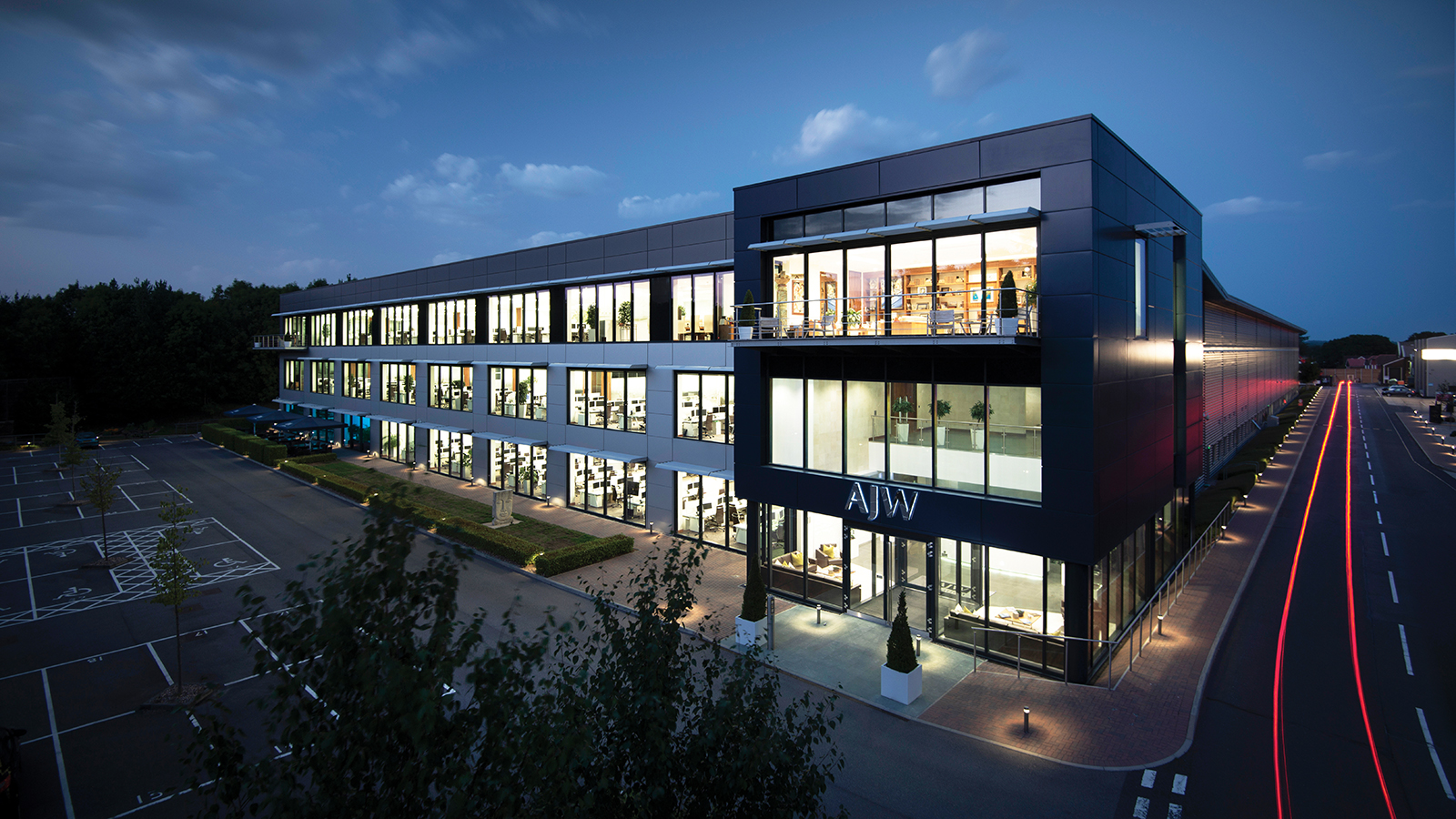
A good example is the AJW Technique Europe facility, near London Gatwick Airport, which offers comprehensive battery repair and overhaul services, including deep cycle, top charge, cleaning, and re-blocking for all commercial aircraft main, auxiliary, and emergency power supplies. Last year saw the installation of over 2,500 solar panels, which are expected to generate nearly 800,000 kWh of clean energy annually to charge the batteries.
The company has shown it commitment to the environment by signing up to the United Nations Global Compact and its goals in 2023. From its MRO facilities, which ensure the responsible reuse and recycling of components, to its global logistics operations: the approach is to repair, reuse, and recycle wherever possible.
Digital innovation is taking this even further. By applying AI and predictive analytics, it can optimise component lifecycles, reduce unnecessary logistics, and minimise surplus stock. These intelligent systems help customers cut both cost and carbon, demonstrating that sustainability and efficiency can go hand in hand.
Buntrock says the biggest challenge to expansion is time. Developing, testing, and implementing new technologies requires careful planning but AJW is at an advanced stage of its digital transformation and is now seeing the benefits with projects already delivering results, and more set to follow in the months ahead.
By Ian Harbison