Avionics & Testing Innovations Conference Concludes Successfully in London, Bringing Together Global Aerospace Leaders
The 2nd Avionics & Testing Innovations Conference concluded successfully in London this week, reaffirming its position as a leading forum for aerospace professionals, technology innovators, testing specialists, and industry decision-makers shaping the future of flight, avionics systems and aircraft testing.
The two-day event welcomed over 200 delegates from across the international aerospace and defence sectors, providing a platform for collaboration, knowledge exchange, and discussion of the latest developments in avionics, testing methodologies, certification requirements, digital transformation and emerging aviation technologies.
Building on the success of its inaugural edition, this year’s conference featured an extensive programme of keynote presentations, expert panel discussions, technical case studies, and networking opportunities. Industry leaders shared valuable insights into the challenges and opportunities facing modern avionics development, system integration, verification and validation processes, cybersecurity, autonomous flight technologies, and next-generation aircraft platforms.
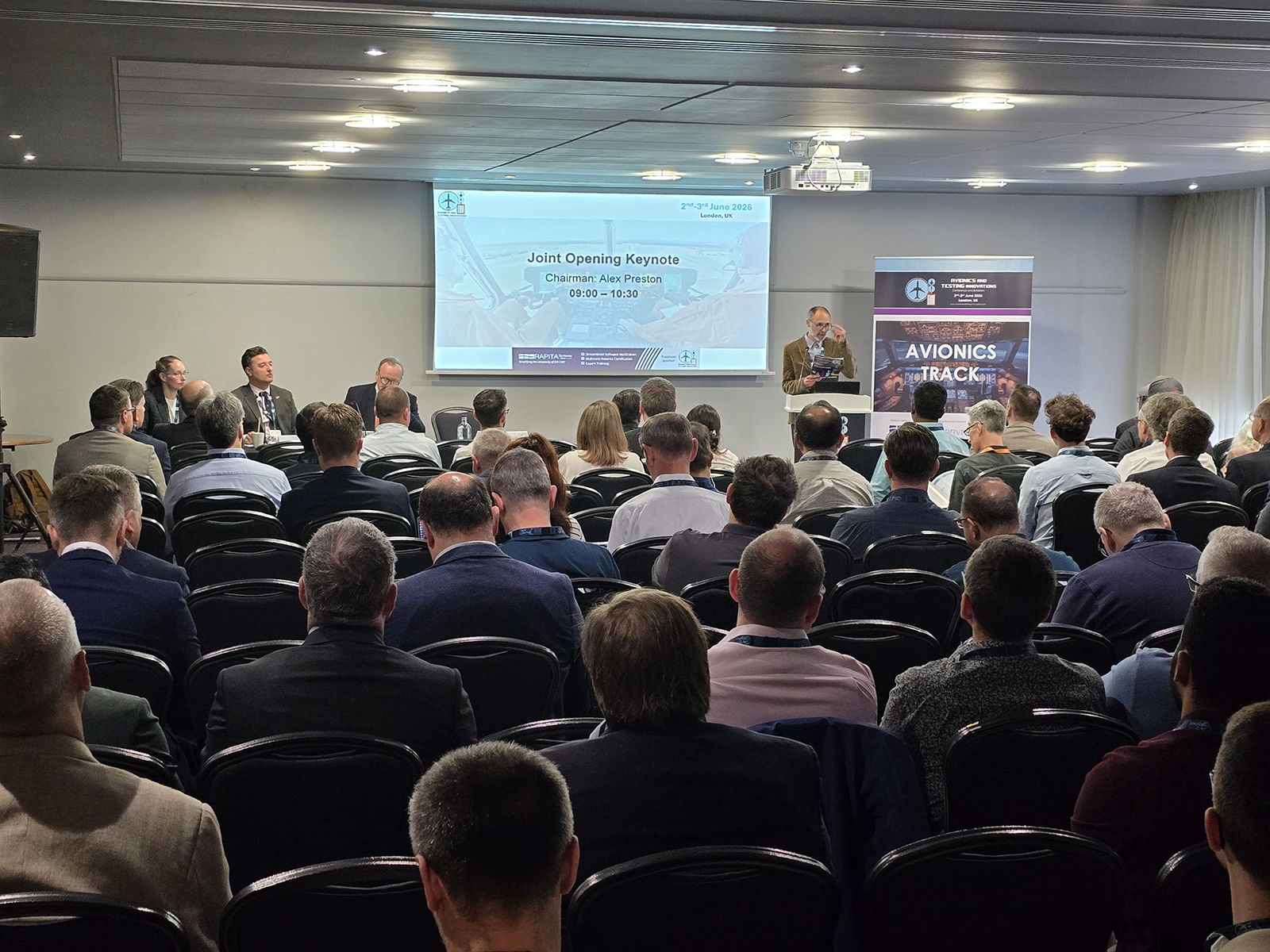
The conference started with a great opening keynote session with top level speakers:
– Helen Leadbetter, Technical Strategy Lead Zero Emissions Flight, UK CAA
– Andrew Kinniburgh, Director-General, Make UK Defence
– Zahid Sultan-Khan, Chief Pilot Boeing 777, Silk Way West Airlines
Participants engaged in in-depth discussions on the evolving regulatory landscape, advances in simulation and digital testing environments, AI/ML applications in avionics, and strategies for improving safety, reliability, and operational efficiency throughout the aircraft lifecycle.
The introduction of the new Future Airborne Capability Environment (FACE) Track enhanced the opportunities for the defence sector to catch up with the status on FACE standardisations and open architecture developments, whilst the Multicore Track offered discussions on the certification challenges the industry is facing in light of phasing out of single core chip manufacturing.
The event also featured a dedicated exhibition area where leading technology providers and solution partners showcased cutting-edge products and services supporting avionics design, testing, certification, and maintenance.
Attendees praised the conference for its technical depth, practical insights, and valuable networking opportunities, with many highlighting the event’s role in fostering collaboration across the global aerospace ecosystem.
As the aerospace industry continues to accelerate technological advancement and digital transformation, the Avionics & Testing Innovations Conference remains committed to creating a platform where experts can address emerging challenges, share best practices, and help shape the future of aviation.