A Modern Approach
Air Traffic Flow Management (ATFM) is an enabler of Air Traffic Management (ATM) efficiency and effectiveness. As traffic grows, an increasing number of countries are beginning to implement ATFM.
As I sit and write this article, there are some 12,507 aircraft airborne. According to the International Air Transport Association (IATA), November flight schedules indicate a 3% expansion on the previous year, as airlines gear up for continued growth into the year-end holiday season.
This comes on the back of record passenger traffic numbers in 2024. Willie Walsh, IATA’s Director General observed that “2024 made it absolutely clear that people want to travel. With 10.4% demand growth, travel reached record numbers domestically and internationally. Airlines met that strong demand with record efficiency.
“Looking to 2025, there is every indication that demand for travel will continue to grow, albeit at a moderated pace of 8.0% that is more aligned with historical averages.”
On a national level, the UK Civil Aviation Authority (CAA) reported that in the first half of 2025, 141 million passengers travelled through UK airports. They also cited a strong punctuality performance, with 75% of flights operating on-time,
8 percentage points up on 2024.
At the time of releasing its aviation trends report, Selina Chadha, Group Director for Consumers and Markets at the CAA commented that “Reliable, on-time flights remain a priority, and it’s encouraging that delays are falling year-on-year.”
As more passengers take to the skies and the volume of air traffic increases, managing air traffic in a safe, efficient, environmentally sustainable, and cost-effective manner is as important as ever.
Go with the flow
One mechanism for achieving this is Air Traffic Flow Management (ATFM), which helps to balance demand and capacity in air traffic operations so that flights move safely and efficiently. It makes sure the amount of traffic matches the available capacity of airports and airspaces, as required by ICAO Annex 11, and is a requirement for Air Navigation Service Providers (ANSPs).
In Europe, ATFM is coordinated with the EUROCONTROL Network Manager (NM) and integrated with Airspace Management (ASM) and Flexible Use of Airspace (FUA) to share capacity between civil and military users.
The Maastricht Upper Area Control Centre (MUAC), an international non-profit civil-military integrated ANSP operated by EUROCONTROL, manages the upper airspace (from 24,500 to 66,000 feet) over Belgium, the Netherlands, Luxembourg and north-west Germany – one of Europe’s busiest and most complex airspace areas. In 2024, in terms of delay/flight, MUAC recorded 0.2 minutes of delay per flight and a 98.4% punctuality rate. En-route ATFM delays were mainly due to ‘Weather’, ‘ATC Capacity’ and ‘Equipment’.
As the MUAC team explains, ATFM is part of Air Traffic Flow and Capacity Management (ATFCM).
The Capacity Management element typically refers to managing the resources such that the available capacity is optimised for the demand. The primary measure in this context is the opening and closing of sectors: as traffic demand increases, more sectors are opened meaning the airspace is subdivided into smaller blocks and thus handled by more air traffic controllers (ATCOs). In the pre-tactical phase (the time before the day of operations), this planning and management of resources is done on a seasonal, monthly, weekly and daily level. At MUAC, this process continues in the tactical phase (day of operations), where this management is highly dynamic; sector openings are continuously adapted to the evolution of the traffic demand during the day. At MUAC, sector openings may change every half hour to adapt capacity to the demand.
ATFM refers to actions that can be taken on the traffic to impact the demand and optimise the distribution of traffic over the available airspace and capacity. Measures can impact the way aircraft operators can file through a certain airspace through the so-called Route Availability Document (RAD) to give an optimal distribution. More dynamic measures include scenarios that act in a similar way but are of a temporary nature (typically a few hours) and are coordinated the day before or on the day of operations itself. Such scenarios are typically either a level-cap (restricting the flight level at which an aircraft can fly, to ‘protect’ the airspace (sector) above from over-demand) or a re-routing (typically with very little extra distance) to avoid the sector.
Such measures can also be taken on individual flights during the day, to avoid that a sector suffers from over-demand.
In case demand is such that the above measures cannot offer sufficient mitigation, then the sector can be regulated. In that case, the number of flights that enter the sector per hour is controlled by assigning individual take-off times (slots) to every aircraft planned to enter that sector. This may mean that an aircraft will have to wait for its slot to take off and is thus delayed compared to its intended take-off time.
When coupled with Airport Collaborative Decision-Making (A-CDM) and System Wide Information Management (SWIM—standards for sharing aviation data), ATFM delivers network-wide transparency so operators can optimise rotations and maintenance. ATFM’s predictability metrics drive smarter staffing, dynamic sector opening schemes, and better use of cross-border routes, enabling equitable, network-level decisions that minimise overall delay rather than shifting problems from one flight information region (FIR) or airport to another.
For its part, EUROCAE Working Groups are developing standards for the performance and interoperability requirements of Air Traffic Management systems which support ATFM in operation.
As a spokesperson explains, EUROCAE has two Working Groups active in this area. Firstly, WG-104 has developed ED-254 ‘Arrival Sequence Service Performance Standard’ which defines the SWIM services needed to support extended arrival management (E-AMAN), whereby the flow control for arriving aircraft can be managed earlier in the flight profile (before top of descent) thereby improving the efficiency of operations and reductions in aircraft operating costs and emissions.
In addition, and related to ATFM, (if not always considered an integral part of the concept), EUROCAE is developing standards to support Airport Collaborative Decision Making (A-CDM). A-CDM facilitates more efficient operations of aircraft on-ground and exchanges with the broader ATFM system, to coordinate aspects such as target pushback, taxiing and take off times, as part of the overall AFTM operation. EUROCAE has recently published two standards in this area; ED-141 ‘Minimum Technical Specifications for Airport CDM Systems’ and ED-146A ‘Guidelines for Test and Validation Related to Airport CDM Interoperability’. In addition, standards concerning the A-CDM data model and updated interface requirements are currently being drafted by the Working Group.
By design
In late September 2025, the UK CAA launched a 12-week consultation (closing on 18 December) on reforms to the UK’s airspace change process, a key part of the UK’s wider programme to modernise airspace. According to the CAA’s Chief Executive Rob Bishton, “Airspace is one of the UK’s most important pieces of national infrastructure. If we want our aviation system to grow in line with planning system decisions, be resilient, compete internationally, and adapt to new technologies, the way we manage and modernise that airspace must also evolve.”
The ATFM team at ENAIRE state that ATFM is pivotal to modernising design. ENAIRE is the air navigation manager in Spain, and the fourth largest ANSP in Europe, with approximately two million flights per year. ENAIRE controls a complex airspace of over 2.2 million km2 of airspace from five air control centres and 21 control towers. According to the department, ATFM “provides the data and incentives to shift from static sectorisation to dynamic airspace configurations, trajectory-based operations (TBO), and digital, service-oriented architectures under initiatives like ENAIRE’s iTEC platform and EUROCONTROL’s integrated Network Manager (iNM) programme.”
The MUAC team agree that ATFM is crucial to ensuring that the airspace is used optimally to serve the demand. “Airspace design shall be such that it is optimised for the typical demand and the flows through that airspace. However, once the design is done, this is static, whereas the operational conditions are not,” they highlight. “ATFM ensures that the flows through the airspace are such that the available capacity of that airspace is optimally used taking into account the operational conditions (e.g. weather, shifting demand, conditions in surrounding sectors) at that moment.
“As demand and conditions evolve, it may be that a pattern emerges in the use of certain ATFM measures. This can then be used as input into airspace (re-)design.”
According to Javier Vanegas, Latin America and Caribbean Director at the Netherlands-based Civil Air Navigation Services Organization (CANSO), the industry association for the ATM industry, a successful ATFM system depends on people, processes, and technology working together. Vanegas says that CANSO recommends a phased approach:
Strategic phase (months to days before operations): Plan capacity, staffing, and major events.
Pre-tactical phase (day before): Adjust plans using updated demand and capacity forecasts.
Tactical phase (day of operations): Apply ATFM measures such as slot allocation or reroutes.
Post-operations phase: Review performance and lessons learned.
He says that the key ingredients for success include collaboration and data sharing between all operational partners, the use of reliable forecasting and decision-support tools, clear governance, agreed procedures, and performance indicators, and ongoing training and regional coordination to keep teams aligned.
It’s a menu ENAIRE’s ATFM team concur with. For them, success rests on three main pillars: data, governance, and culture. For data, they highlight high-fidelity demand and capacity predictions, SWIM integration, and advanced modelling (e.g., demand-capacity balancing with machine learning). For Governance, they advocate for clear roles across Network Managers (NM), ANSPs like ENAIRE, airports, and airlines, with agreed-upon playbooks for regulations, scenarios, and recovery. Culture is also key with the need for collaborative decision-making that values network outcomes over local optimisation. “Practically, we sequence roll-outs via A-CDM, integrate ASM/FUA processes, adopt common APIs through ATM Data Service Providers, and measure success with shared KPIs—delay per flight, predictability, resilience, and environmental performance.”
For example, ENAIRE managed 228,069 flights in June 2025, (4.4% more than in June 2024). This was achieved alongside a 29% reduction in delays from all causes in June 2025 compared to June 2024, as well as an 11% improvement in safety and sustainability indicators compared to the previous year.
Despite advances in ATFM in recent years, deficiencies remain.
Shortcomings
Whilst noting that progress has been strong, Vanegas notes that implementation still varies from one region to another. “Some persistent challenges include scaling up regional systems into larger, fully connected networks, aligning procedures and regulations across borders. Moreover, securing the investment and training needed to maintain performance over time, is certainly an additional impediment,” he says.
At ENAIRE, the ATFM department deems any persistent challenges as structural. These embrace some legacy procedures, predictability, an increasing number of severe weather phenomena, fragmented data, and growing military activity in Europe. “In Spain, ENAIRE is mitigating these through tighter NM integration and civil – military coordination, developing strategical projects in order to improve capacity and efficiency, as well as to continue enhancing the flexible use of the Airspace,” the department state.
Other critical issues that exist today include inconsistent or poor-quality data that limits shared situational awareness, different national procedures that make regional coordination and collaboration harder, challenges in predicting capacity changes due to weather volatility or staffing challenges, human factors such as fatigue and acceptance/introduction of new technology, increasingly frequent special use airspace activations, and uneven digital maturity across stakeholders.
“We still face limits in probabilistic capacity forecasting, dynamic sectorisation at scale, and the human-systems integration needed for real-time reconfigurations,” adds ENAIRE.
It’s also agreed that there are research gaps in our understanding of ATFM. These include robust uncertainty modelling for trajectory-based operations (TBOs), network resilience under compound disruptions (weather + strikes + military activity), and incentives that internalise environmental costs. To this list, Vanegas adds better tools for demand and capacity forecasting, ways to include environmental performance in ATFM planning, studies on how people and automation can work together effectively, and methods for fair delay distribution across multiple operators.
As the MUAC team explains, decision-making in ATFM relies on forecasts (for longer-term measures such as seasonal capacity measures) and predictions (for decisions on D-1 or the day itself). Therefore, the quality of these forecasts and predictions has a direct influence on the quality of ATFM. Volatility in the network (the shifting of predictions as a result of changes in timing, routes and flight levels) causes a continuously changing picture, that can impact decision-making.
MUAC is very pro-active in both the Capacity Management part of ATFCM and in ATFM and has developed state-of-the-art tools to support the decision-making in both areas.
“For the Capacity Management, we have a sophisticated process to plan our sector configurations for the day, starting almost one year out and refining nearer the date as better forecast data becomes available,” the team says. “Sector configuration management on the day itself is extremely dynamic and always adapting to traffic demand. This means opening sectors where required but also closing sectors where possible, to ensure resources are available for high traffic periods throughout the rest of the day.”
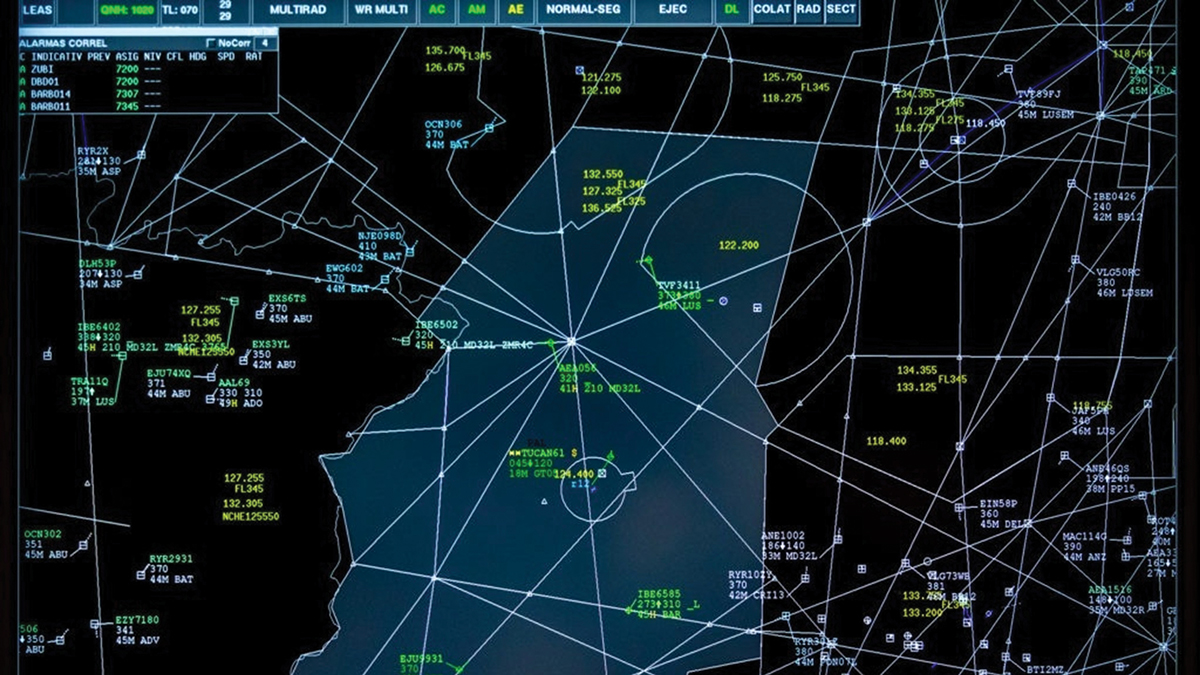
For the ATFM part, the in-house developed flow management tool iFMP allows close monitoring of traffic demand on a minute-by-minute basis. What-If tools are available to assess the effectiveness and impact of different measures, allowing MUAC to maximise its capacity and minimise the impact on airspace users. “Route advisories are also offered to aircraft operators to make them aware of the most efficient routes through our airspace. This too is a very dynamic process and also done during the day of operations to maximise performance,” they state.
CANSO is helping its members by sharing best practices and tools that make ATFM easier to plan and deliver.
This includes the Implementing ATFM and CDM publication which gives ANSPs a clear roadmap for building and operating ATFM systems. Moreover, CANSO has been running CADENA – the CANSO ATFM Data Exchange Network for the Americas – which was designed precisely to enhance regional coordination during disruptive events such as severe weather as well as other events which have the potential to disrupt operations.
In partnership with Metron Aviation, a wholly owned subsidiary of Stratify, and provider of ATFM software solutions, COMPASS – short for CANSO Operational Messaging Platform for Air Traffic Flow Management (ATFM) Sharing and Synchronisation, which will be officially live by early 2026, is also designed to improve situational awareness and collaborative decision-making across the aviation community.
Giving further details, Vanegas says that with COMPASS, there will be a transition from existing regional platforms, such as the CADENA OIS in the Americas, toward a single, globally harmonised solution. “This approach builds on the proven strengths of CADENA while introducing enhanced capabilities to further improve air traffic operations globally. Moreover, it will strengthen regional cooperation through a shared platform where airports, airlines, and air traffic control facilities can exchange information and promote global harmonisation by aligning regional systems into one connected, worldwide network,” he says.
CANSO also runs training courses and simulation workshops to help members strengthen their ATFM and CDM capabilities.
Things to come
Looking to the future, MUAC believes that airspace design will have to maximise structural capacity of the airspace, but ATFM will be required to ensure that this capacity is used under all circumstances. Automation including AI will also play an important role and is already being used at MUAC to improve prediction accuracy.
Vanegas agrees. “The future of ATFM will focus on smarter, more connected, and environmentally responsible operations,” he says. He has confidence that regional and global networks like CADENA and COMPASS will make data sharing seamless and global which will certainly boost collaboration.
“Advanced forecasting and automation will help anticipate congestion earlier, flow management will play a bigger role in reducing emissions through efficient routing and reduced holding, and human-centred tools will support controllers and flow managers in making faster, more informed decisions,” he adds.
The ATFM department at ENAIRE see that ATFM is evolving into continuous, predictive network orchestration. “Expect pervasive TBO, 4D trajectories negotiated against probabilistic capacities, space transport operation (STO) integration (these improvements are actually around the corner) and AI-assisted scenario management that proposes dynamic airspace shapes minutes to hours ahead. NM’s iNM services, ENAIRE’s iTEC upgrades, and SWIM-native ADSP ecosystems will turn today’s regulations into pre-tactical “nudges” and tactical micro-adjustments that minimise delay and emissions. Civil-military FUA will become more dynamic and data-driven, while urban air mobility and RPAS (Remotely Piloted Aircraft Systems) will be integrated via common services. The end-state: a resilient, greener network where capacity follows demand safely and predictably by design.”